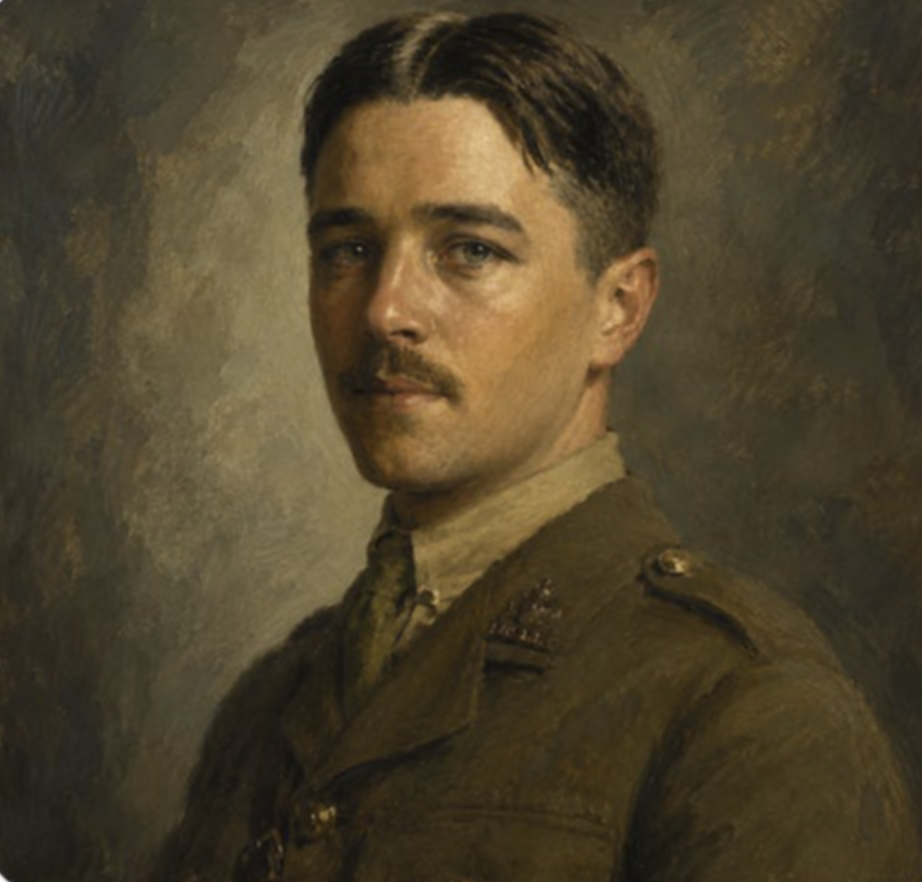
Wilfred Owen was killed in World War I, one week before Armistice (November 11, 1918), at the age of twenty-five. By the time he died, he had published a mere five poems. Still, we remember him. We remember his voice, his imagery, his poetic style, his passion and compassion. No other poet captured the horror of the trenches and the poisonous gas as vividly as he did. No other poet captured the pity and the waste of so many young men who came home wounded in body and mind. Wilfred Owen (1893-1918) wrote down what he witnessed and experienced on the battlefield. His was an honest and authentic voice, but also a voice steeped in the rhetoric of pre-war Georgian poets who wrote mainly about the beauty of nature in gorgeous sweet cadences. Perhaps, the power of Owen’s voice stems from this tension between the naked horror of what he describes and the rich rhetoric he uses to capture the consequences of war. Owen famously wrote: “All the poet can do today is warn. That is why true Poets must be truthful.” As readers, we hear the conflict of a young man who still believes in the “true Poet” and who can, in spite of everything, remain “truthful.”
Continue article here
Horror and Rhetoric: The Poetry of Wilfred Owen
Next
Next